
AI content policy on YouTube, Instagram, and TikTok: what creators need to disclose in 2026
The short version: all three platforms now care less about whether you used AI at all and more about whether your post can confuse people. If your AI edit makes something look real, changes what a real person said or did, or turns fake footage into something that feels documentary, you should expect a label at minimum and a takedown in the worst cases.
Direct answer
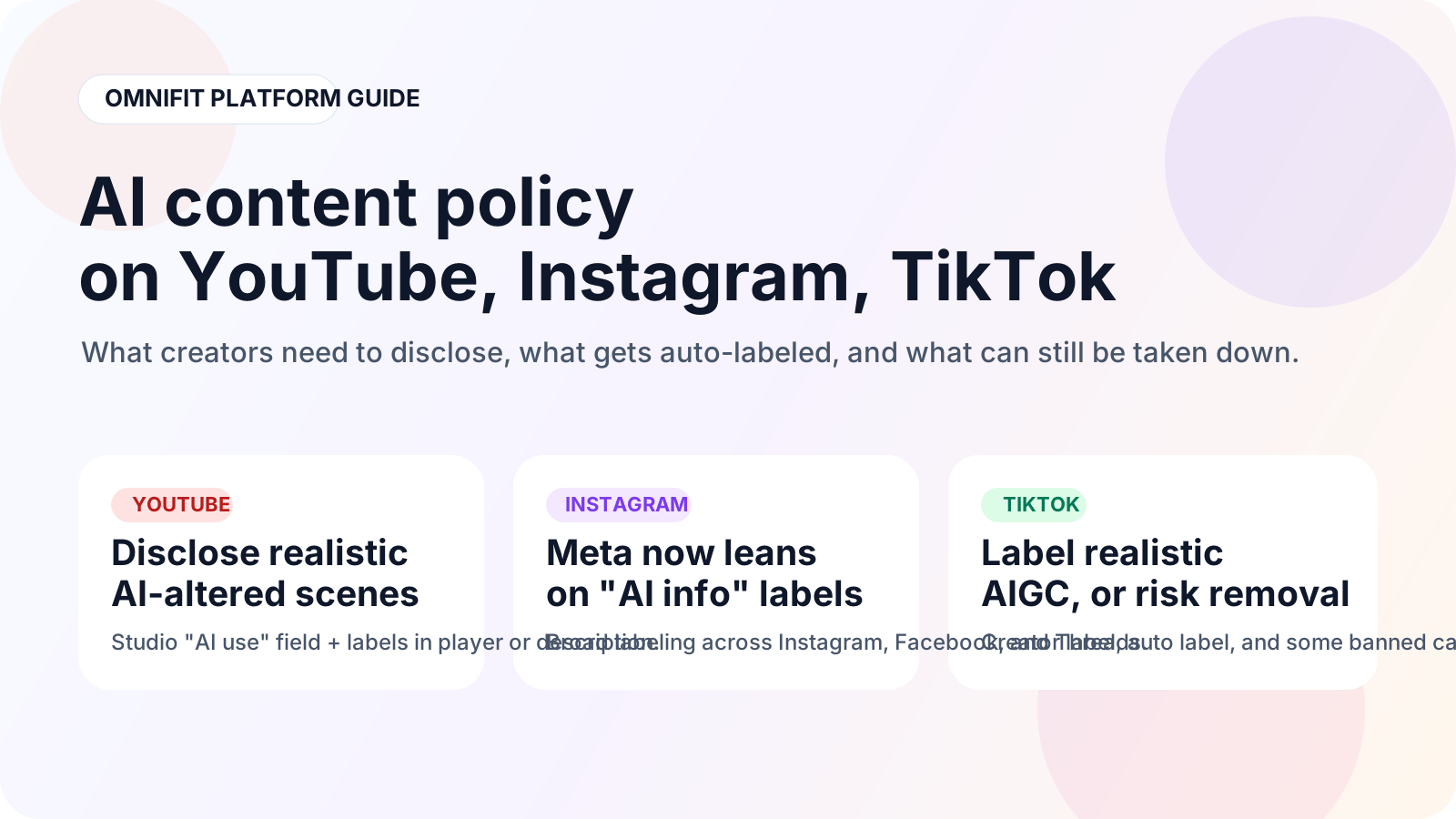
YouTube wants disclosure when AI meaningfully alters or generates photorealistic content, especially when a real person, place, or event could be misunderstood.
Instagram, through Meta's broader policy, leans on "AI info" labels and context rather than automatic removal for most manipulated media, unless the post also breaks another policy or creates a high-risk deception case.
TikTok requires creators to label realistic AI-generated content and also bans some categories even when they are labeled, including certain fake authority or impersonation cases.
The safest creator rule is simple: if a normal viewer could mistake your AI output for a real clip, real quote, or real event, disclose it before you post.
The creator cheat sheet
| Platform | What usually triggers disclosure | How viewers see it | Main creator risk |
|---|---|---|---|
| YouTube | Photorealistic AI that changes what a real person, place, or event appears to be | AI label in the player or expanded description | Manual labels, takedowns, or YPP penalties if you keep skipping disclosure |
| Instagram / Meta | AI-generated media or content detected through industry signals or self-disclosure | "AI info" label, with placement depending on whether the media was generated or only edited | Reduced reach, stronger labels in higher-risk cases, or removal if another Meta policy is broken |
| TikTok | Realistic AI-generated or significantly AI-edited media | Creator label or auto label | Removal for unlabeled misleading media or for banned AI cases even if labeled |
This is a creator-facing read, not legal advice. The goal here is to help you post with fewer policy surprises.
How the major platforms are converging
We require creators to disclose when they use AI to meaningfully alter or generate photorealistic content.
YouTube's framing is realism plus meaningful alteration. It is not asking you to confess every cleanup pass. It is asking you to flag the kinds of edits that can fool viewers.
Providing transparency and additional context is now the better way to address this content.
Meta's policy direction is broader labeling and more context, with removal reserved for higher-risk cases or posts that already violate another rule.
We also require creators to label all AI-generated content that contains realistic images, audio, and video.
TikTok is blunt about realistic AIGC. If your output looks real, it wants a label. It also spells out a few categories that are off-limits anyway.
YouTube: disclosure is tied to realistic deception risk
YouTube's official help page focuses on realistic, meaningful change. The platform says creators must disclose AI content that makes a real person appear to say or do something they did not do, alters footage of a real event or place, or generates a realistic scene that did not happen.
That is a practical rule for AI video creators. A stylized anime clip or a clearly fictional motion design piece is not the same risk as a fake interview clip, a fake protest scene, or a synthetic product demo presented as documentary footage.
Use the AI use field in YouTube Studio during upload whenever your AI edit changes the truth value of a realistic scene.
YouTube says a label may appear in the player for photorealistic AI content, or in the expanded description for non-photorealistic or animated content.
If creators consistently do not disclose, YouTube says it may apply labels manually or penalize the channel, including removal of content or suspension from the YouTube Partner Program.
One important line from YouTube's page is easy to miss: disclosing AI content does not by itself limit audience reach or monetization eligibility. The bigger risk is trying to hide realistic AI media and letting the platform or viewers catch it later.
YouTube also says it may automatically label content made with its own GenAI tools, content containing C2PA metadata, or content its systems detect as AI-generated or altered. In other words, manual disclosure is no longer the only path to a label.
Instagram: Meta moved from "remove first" to "label and contextualize"
Instagram does not have a standalone AI creator rule that lives apart from Meta. Instead, Instagram inherits Meta's broader policy system for Facebook, Instagram, and Threads. The most important official shift is that Meta now prefers AI labels and context in more cases, rather than removing manipulated media by default.
Meta's April 2024 policy announcement said it would broaden labels across video, audio, and image content, relying on industry signals and self-disclosure. The September 2024 update refined that again: content detected as only AI-edited or AI-modified may move the AI info label into the post menu, while content detected as AI-generated still keeps a more visible label.
The creator takeaway: on Instagram, small AI retouching and fully synthetic media are not treated the same way anymore. That does not mean hidden edits are safe. It means Meta is trying to match the label to how much AI changed the content.
Meta says it will add AI info labels when it detects industry-standard indicators or when people self-disclose AI-generated uploads.
Meta says labels will cover a broader range of content, and high-risk deception cases may get a more prominent label so viewers have more context.
Meta says AI content can still be removed if it breaks other rules such as voter interference, bullying and harassment, violence and incitement, or other Community Standards.
There is also a distribution angle creators should not ignore. Meta says independent fact-checkers can rate AI content as false or altered, and that content may be shown lower in Feed with added overlay labels. So even when a post stays up, AI policy can still hurt reach.
TikTok: the strictest creator workflow of the three
TikTok's support page is more operational than Meta's and more explicit than YouTube's. It says creators should label content that is completely generated or significantly edited by AI, and it also says creators must label all AI-generated content that contains realistic images, audio, and video.
TikTok gives concrete examples of significant AI editing: making subjects do something they did not do, say something they did not say, or altering their appearance so much that the original person is no longer recognizable. That makes the policy easy to translate into a posting checklist.
Creators can add text, a hashtag sticker, description context, or use TikTok's built-in AI-generated content setting before posting.
TikTok may automatically label content made with TikTok AI effects or uploads carrying Content Credentials metadata. Once an auto label is applied, TikTok says creators cannot remove it.
Some AI media is banned even if labeled, including fake authoritative sources or crisis events, certain fake public-figure depictions, the likeness of minors under 18, and private adults used without permission.
The practical result is that TikTok asks for the cleanest creator behavior: label realistic AIGC early, avoid gray-zone impersonation experiments, and assume the platform is building more automation around provenance metadata.
What creators should actually do before posting
If the post looks like evidence, testimony, documentary footage, a real location record, or a real product demo, treat it as high-risk AI media and disclose it.
Color cleanup, denoise, or light retouching is different from face swaps, synthetic speech, scene generation, or replacing what happened in the frame.
If your tools output C2PA or Content Credentials, assume platforms may read them. Do not build a workflow around hiding that trail.
Do not wait until comments start asking. Build disclosure into your posting template so editors and social managers make the same call every time.
Those categories trigger stronger platform scrutiny. A flashy AI edit that feels harmless in an art account can become a policy problem in a news-like context.
If a platform applies a label by mistake or a client asks what was synthetic, you want a clean internal note on which shots were generated, dubbed, swapped, or expanded.
The main pattern behind all three platforms
The old creator question was, "Can I post AI content?" The new question is, "Will a viewer misunderstand this as real?" That shift matters more than the platform-specific wording.
YouTube focuses on meaningful photorealistic deception. Meta focuses on labeling and context, with stronger interventions when harm rises. TikTok combines labeling with a clearer list of off-limits cases. The policies are not identical, but they are moving in the same direction: transparency first, provenance second, enforcement when the content crosses into deception, impersonation, or public harm.
FAQ
Do I need to disclose every AI-assisted edit?
No. The official language on these platforms is mostly about realistic or significant change, not every minor enhancement. The safest line is whether your AI pass changes what a viewer believes happened.
Does disclosure automatically kill reach?
Not automatically. YouTube explicitly says disclosure itself does not limit audience or monetization eligibility. Meta and TikTok can still downrank or remove content for other reasons, especially if the post is misleading.
What if a platform labels my post automatically?
That will happen more often as C2PA and similar provenance signals spread. On TikTok, an auto label may be non-removable. On YouTube, some automatically or manually applied labels also cannot be adjusted.
What is the safest default for AI video teams?
Use a simple rule: if the clip looks real and AI changed the truth of who said what, what happened, or what the camera saw, disclose it before publishing.
Bottom line
For creators, AI policy is becoming a workflow problem, not just a legal problem. Your editing stack now needs one extra question before export: does this clip still read as truthful without context? If the answer is no, the platform wants a label, and sometimes more than a label.
If you build social content with lip-sync, dubbed avatars, face swaps, scene generation, or AI-expanded footage, this is no longer edge-case compliance work. It is part of normal publishing hygiene.
Official sources used in this guide
Disclosing use of GenAI content
Used for YouTube's disclosure trigger, label placement, auto-label conditions, and non-disclosure penalties.
Our Approach to Labeling AI-Generated Content and Manipulated Media
Used for Instagram's Meta-level AI labeling policy, the switch toward labels and context, and the September 2024 "AI info" update.
Used for TikTok's realistic AIGC labeling requirement, auto labels, and prohibited AI content categories.