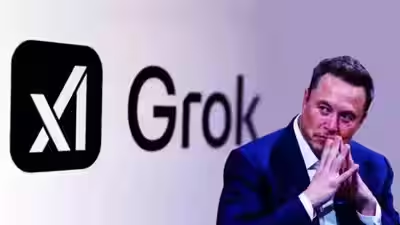
The central question: these retreats raise serious questions about the economics of building and running a general-purpose video model. They do not establish that demand for useful video tools has disappeared. For creators, the practical question is which system gets the job done reliably at an acceptable cost.
1. What actually happened?
Investing.com reported on November 13 that roughly 60 roles were eliminated from Grok Imagine’s image-and-video team, citing The Information. It says a small maintenance team remains, Imagine is still accessible, and resources are shifting toward coding tools and Grok Bot. The report points to compute demands and weaker benchmark performance as pressures. [1]
The report does not establish the exact layoff date, a product shutdown date, or the unit’s profitability. The headcount is attributed to reporting, not an xAI confirmation.
OpenAI’s help center confirms that the Sora web and app experiences ended on April 26, 2026. Its API ended on September 24. That makes Sora a historical comparison rather than an available production option. [2]
Axios linked the shutdown to compute demands and refocusing; OpenAI said world-simulation research would continue for robotics. [3]
Why cut when the technology is improving?
One plausible explanation is that the opportunity cost of compute has become harder to ignore. A company running coding products, assistants, and video models must decide where each GPU and engineering team delivers the most value. Video can improve technically while still losing that internal allocation decision.
A second pressure is differentiation. A striking demo may attract attention, but buyers can switch when another model becomes cheaper or better. A standalone video product needs sustained usage and healthy margins, not just launch excitement.
These are economic explanations, not claims about Musk’s internal decision or either company’s complete financial picture. The published evidence supports a retreat in investment and product scope, not a verdict on every video business.
2. Who leads AI video now?
There is no single winner across every task. In Artificial Analysis’s with-audio boards, Wan 3.0 leads text-to-video and Dreamina Seedance 2.5 leads image-to-video. MiniMax H3 is near the top of both. Utopai X also ranks highly, although the board lists no available API. [4] [5]
| Model / official image | AA T2V with audio | AA I2V with audio | Why it belongs on the shortlist |
|---|---|---|---|
 Wan 3.0Alibaba | #1 | #11 | Text-led generation 30-second generation and multimodal editing on Model Studio. |
 Utopai XUtopai Studios | #2 | #2 | Film-production platform Available inside PAI; AA lists no public API. Check access before planning an integration. |
 MiniMax H3 (768p)MiniMax | #3 | #4 | Open-weight option Downloadable weights under a community license; native 768p, with a separate 2K regeneration stage. |
 Dreamina Seedance 2.5ByteDance | #4 | #1 | Image-led storytelling Reference control, editing, and up to 30-second generation. |
 Gemini Omni Flash 1.2Google | #5 | #14 | Conversational editing Official product name: Gemini Omni 1.2 Flash. Native 3–15-second generation and editing; API available. |
 Grok Imagine Video 1.5xAI | #16 | #17 | Product still accessible Reported team cuts change its development outlook. No closure date has been confirmed. |
 Kling 4.0KlingAI | — | — | Editing candidate Officially launched October 15. The cited AA snapshot ranks older Kling 3.0 variants, not this version. |
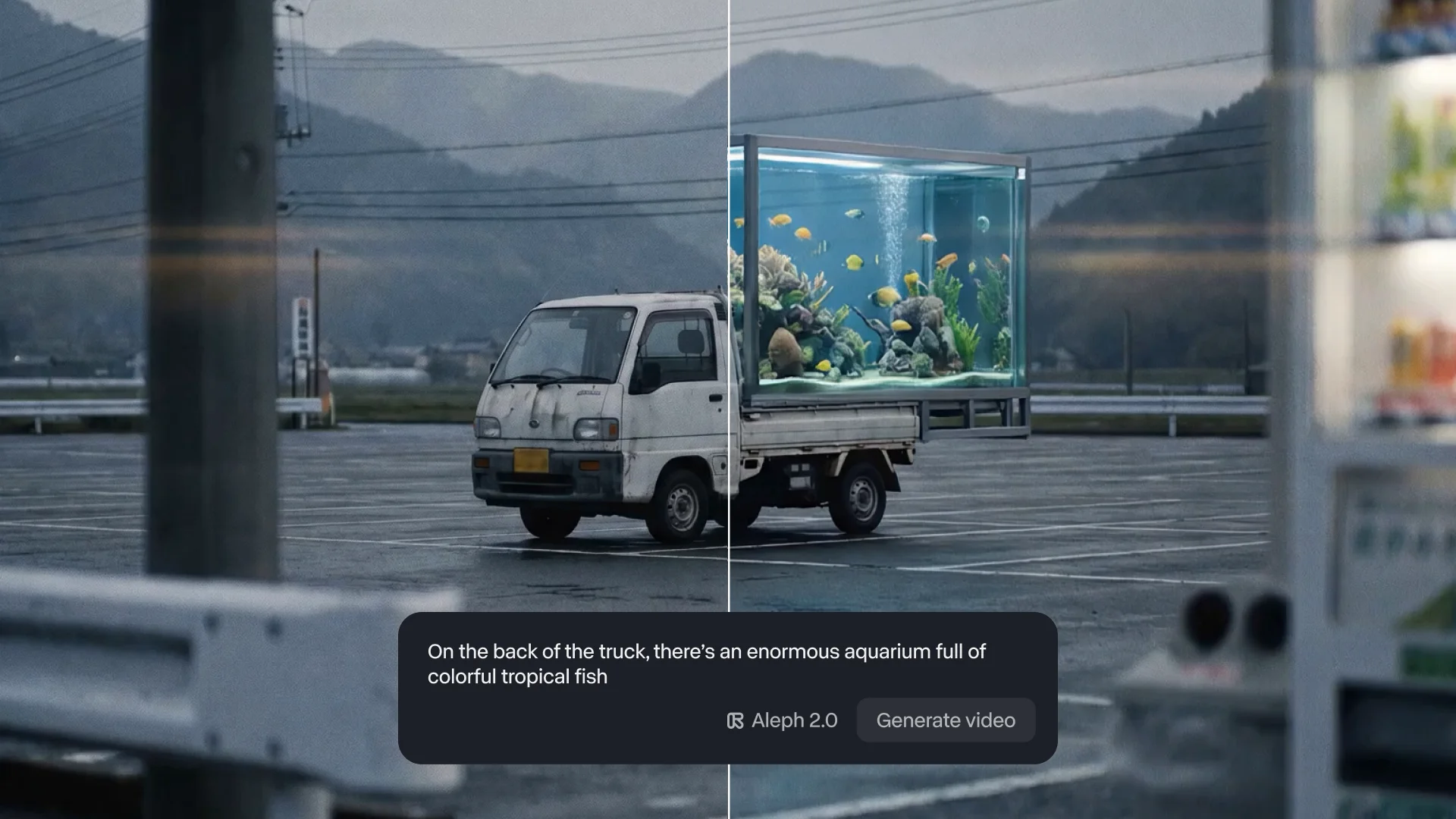 Aleph 2.0Runway | — | — | Spatial expansion Runway explicitly documents aspect-ratio expansion in Edit Studio. Test it as an editing tool, not a T2V ranking. |
 SoraOpenAI | Retired | Retired | Historical comparison Web/app ended April 26, 2026; API ended September 24. Not a current production choice. |
Rank columns use AA’s Overall, with-audio boards, not a new combined ranking. This is a selected comparison, not the full leaderboard. “—” means this exact model/version is not ranked in the cited snapshot, not that its quality is poor. Images: official announcement artwork or brand marks from the vendors linked in each row; Sora uses the thumbnail of OpenAI’s official launch video. They identify the products and are not a controlled comparison of model output. Copyright remains with the respective owners.
Why does another leaderboard tell a different story?
Arena’s November 8 image-to-video snapshot puts Gemini Omni 1.2 Flash first, ahead of Seedance 2.5 and MiniMax H3. But Gemini’s result is marked preliminary, with a rank range of 1–5. That is a useful signal, not a settled championship. [6]
Prompt sets, voters, model variants, audio settings, and confidence intervals differ. Scores from separate boards should not be treated as the same scale. More importantly, preference for an attractive generated clip does not prove that a model can preserve a customer’s face, logo, subtitles, or camera motion during an edit.
3. Where does the video battle go next?
Training, serving, safety, distribution, and developer support are separate costs. That gives teams a reason to buy generation from multiple suppliers and put their effort into a specific customer workflow.
Editing, reference control, reusable characters, format conversion, and fast correction matter when a team has a deadline. The winning application must remove work that users otherwise do manually.
The headline price per second misses retries, review time, failures, and repair. A cheaper request can produce a more expensive finished video if it takes five attempts to get one acceptable result.
Model availability can change. Teams need alternatives, clear failure handling, and outputs they can reuse elsewhere. Depending on one endpoint is convenient until that endpoint changes its limits or goes away.
This section describes potential opportunities, not a forecast that any particular vendor will win.
For reframe and outpainting, test the actual job
Runway already documents spatial aspect-ratio expansion with Aleph 2.0 in Edit Studio. Its guide specifies conventional ratios, videos longer than 2 seconds and shorter than 30 seconds, and recommends single-shot input for the most consistent results. That is a concrete editing capability, rather than a general generation score. [7]
For tools such as OmniFit, the next comparison should use real source footage: a talking head, a product demo, a moving camera, subtitles, and a multi-shot ad. Check whether the original content stays intact, the new borders remain stable, and successive chunks still belong to the same scene.
Better models can lower the cost of making video. The business opportunity is turning that capability into a dependable outcome customers will pay for again.
Explore OmniFitFurther coverage
Read BeInCrypto’s coverage of the Grok video-team cuts and AI economics.
Watch the product, not just the rank
Watch OpenAI’s official “Introducing Sora 2” launch demo on YouTube. This is historical context: it shows the product ambition before the confirmed shutdown, not a currently available service.
For current editing capabilities, Runway’s official Aleph 2.0 announcement includes demonstrations, while ByteDance’s Seedance 2.5 page provides example videos. Vendor demos are curated; real-source-footage testing remains essential.
Sources and verification notes
Checked November 13, 2026. Rankings and availability can change. The xAI story is attributed secondary reporting; Sora’s closure dates are officially confirmed. Model capabilities are vendor documentation, not independent benchmark results.
Investing.com, November 13, 2026; citing The Information. Secondary reporting, not a company statement.
Read sourceOpenAI’s official closure dates.
Read sourceAxios reporting on compute and research priorities.
Read sourceWith-audio, Overall snapshot checked November 13. Exact listed variants matter.
Read sourceWith-audio, Overall snapshot checked November 13.
Read sourceNovember 8 snapshot; Gemini result marked preliminary.
Read sourceAleph 2.0, input constraints, and single-shot guidance.
Read source