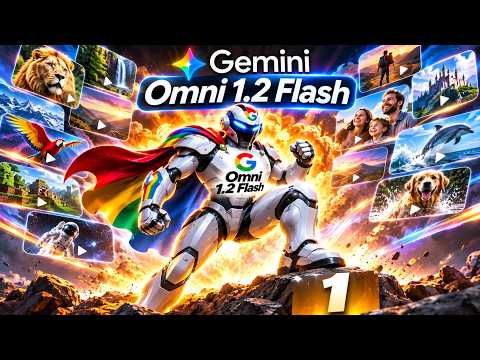
Short take: if you were hearing Google Omni 2.1, the verifiable release to care about is Gemini Omni 1.2 Flash. Google is selling three things: native 15-second generation and editing, better consistency across scenes, and 30% lower pricing than Omni 1.1 Flash.[3]
What actually shipped
The official Google launch page says Gemini Omni 1.2 Flash brings native 15-second video generation and editing instead of shorter default clips.[3]
Google’s pitch is not only longer duration. The launch page also emphasizes stronger consistency from shot to shot, especially for faces, garments, packaging details, and brand colors held across camera angles.[3]
The official headline claim is a 30% lower price versus Omni 1.1 Flash, which is a big part of why this release matters to creators and small teams instead of only enterprise buyers.[3]
Google says the same update is already available across the Gemini API, Google AI Studio, Google Vids, and Gemini for business, so this is positioned as a practical workflow model rather than a lab-only demo.[3]
15 seconds
Google’s verified jump in default clip length.[3]
30% lower
The official price-cut message versus Omni 1.1 Flash.[3]
Google Vids
The product angle for non-developers and workspace teams.[4]
YouTube tests
Where the earliest public creator validation is already happening.[6][7]
One product detail creators should not miss
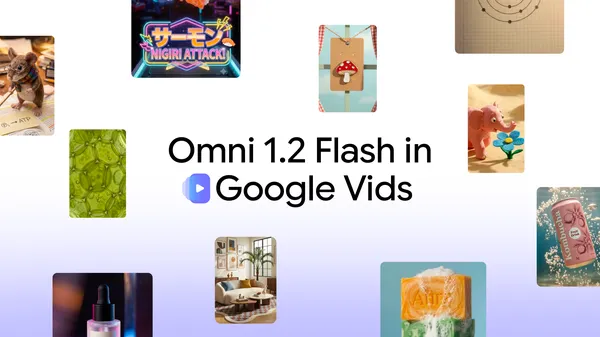
Google is also pushing Omni 1.2 Flash through Google Vids, where the official message is even simpler: users can generate 15-second clips and more consistent scenes at no extra cost inside the product.[4] That matters because it turns the release from a model story into a workflow story for teams making explainers, internal demos, sales videos, and lightweight promo content.[4]
One official visual that shows the angle
What creators seem to care about first
I could not reliably verify Reddit threads or YouTube comment sentiment from this environment, but I did verify multiple creator-made YouTube videos testing and explaining the release within days.[6][7]
The most repeated creator-side talking points are exactly what you would expect: 15-second clips, roughly 30% cheaper usage, and whether that changes the cost-per-iteration math for AI-video work.[6]
The early comparison behavior is not blind hype. Creators are already running Gemini Omni 1.2 Flash head-to-head against Seedance 2.5 and Kling 4.0 to see where the raw outputs actually hold up.[7]
The strongest creator reaction is practical: can this model draft faster, stay more consistent, edit better by prompt, and hold up enough that it saves real time? That is a more useful question than whether the name sounds newer than “Omni 2.1.”[3][6]
Yes — there are already YouTube creator videos
Why this matters for AI-video makers
If Google can make longer, steadier clips cheap enough to iterate on, it becomes easier for creators to use Omni for ads, explainers, product spins, virtual try-ons, and early storyboard drafts.[3] The reason to watch this release is not just spec-sheet bragging. It is whether the model becomes cheap and predictable enough that creators keep it in their weekly workflow instead of treating it like a one-time demo.[3][6]
The biggest caveat
The public buzz is already running ahead of the clean naming. In the Google sources I could access, the launch is clearly called Gemini Omni 1.2 Flash, not Omni 2.1.[3][5] So the safe read is: use the official name, keep the claims grounded, and watch real creator comparisons before declaring a quality winner.[3][7]
Sources used for this post
Used for the official product name, 15-second claim, consistency pitch, lower pricing, and rollout across Google tools.
Read sourceUsed for the creator-facing product angle: 15-second clips, more consistent scenes, and no-cost availability inside Google Vids.
Read sourceUsed to confirm the accessible official naming and locate the exact launch entry in Google’s own feed.
Read sourceUsed for the early creator workflow framing and the hero image.
Watch videoUsed to verify that creators are already comparing Gemini Omni 1.2 Flash against Seedance 2.5 and Kling 4.0.
Watch video