
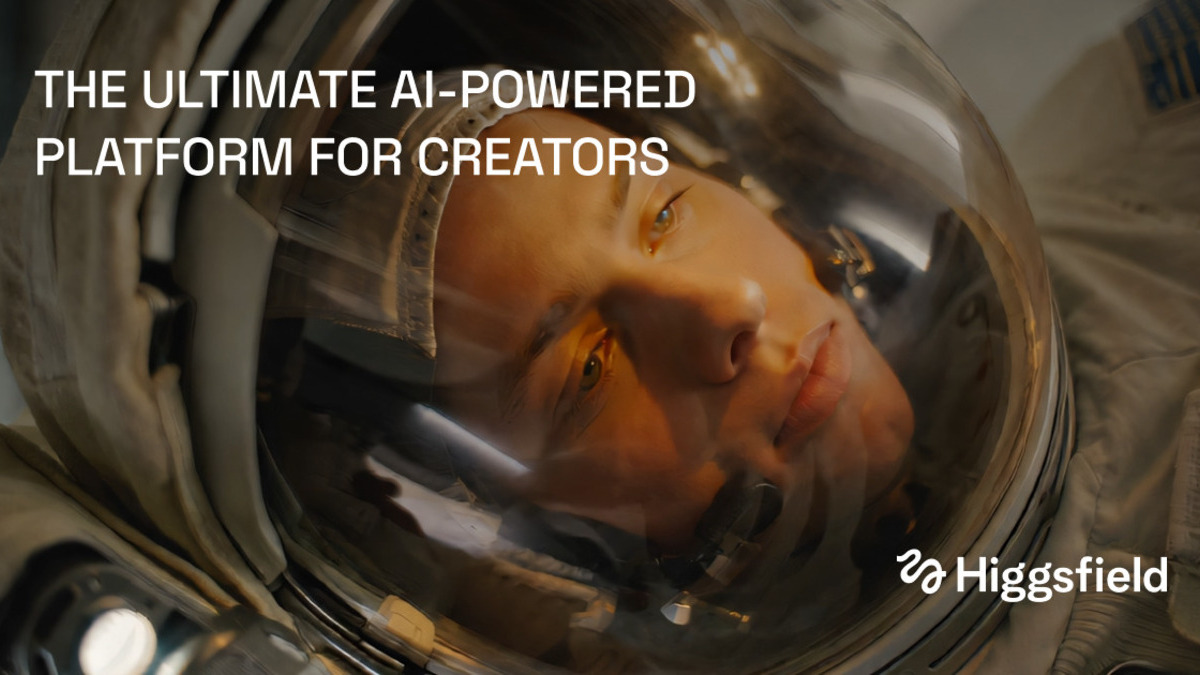
Higgsfield has become one of the hottest AI-video names after reports of a new $400 million round at a $5.4 billion valuation, following earlier reports that its annualized revenue had already surged fast.[1][2]
The headline behind the hype
Higgsfield's momentum makes more sense when you look at ad workflows
On paper, the Higgsfield story looks like a classic AI startup rocket ship: media reports in August said the company raised $400 million at a $5.4 billion valuation, and multiple reports in the months around that financing said annualized revenue had already reached the high hundreds of millions.[1][2] That is obviously a big funding story. But the more interesting part is why so much demand showed up so quickly.
The simple answer is that Higgsfield is not selling one shiny AI demo. It is positioning itself around a creator and marketing job that is already painful at scale: make more ad videos, test more hooks, localize faster, and keep the output looking good enough to ship.[4][5]
Plain English:
Brands used to ask, “Can AI make a video?” Now they ask, “Can AI make ten ad versions this afternoon, in the right format, with decent realism, and without another shoot?” That is a much bigger market.
Why demand is rising
Ad teams need variation more than they need one perfect film
Modern performance marketing runs on testing. Teams want multiple openings, different emotional angles, product-first cuts, UGC-style versions, voice swaps, alternate hooks, and different lengths for different placements. That work is expensive and slow when every change means another production day, another editor pass, or another creator brief.
AI tools change that math. If a platform can turn product shots, prompts, reference images, and existing footage into usable ad variants quickly, then the value is not just “video generation.” The value is creative throughput. That is why a company like Higgsfield can grow fast when the broader ad market starts treating AI as production infrastructure instead of novelty.
What Higgsfield is actually selling
The pitch is speed, control, and campaign volume
Higgsfield's public product pages are already framed around marketing and campaign output, not just art generation. Its AI-video page talks about one workspace for top models, frame-level creative control, product-photo-to-video ad generation, and campaign-speed production.[4] Its broader company copy says the platform wants to make professional image and video creation accessible and faster for creators and brands.[5]
That matters because the fastest-growing AI-video businesses are probably not the ones serving only experimental filmmakers. They are the ones that plug into repeatable commercial demand: e-commerce launches, social campaigns, product promos, performance ads, and agency production overflow.
Why now
Four forces are hitting at the same time
- Creative fatigue is real. Paid social needs fresh assets constantly. Winning ads burn out fast, so teams need more iterations.
- Short-form platforms trained the market. Buyers are used to native-looking, fast-moving, creator-style ads rather than only polished studio spots.
- Localization matters more. The same campaign may need multiple languages, faces, styles, or market-specific cuts, which AI makes easier to produce.[4]
- Small teams want studio output. If two or three people can make ad creative that used to need a larger crew, the tool budget becomes easier to justify.
Put those together and the demand curve makes sense. The market is not only rewarding image quality. It is rewarding faster ad operations.
Why Higgsfield stands out
The winner is usually the platform that makes ads feel less synthetic
There are now many AI-video tools. The ones that get pulled into real ad workflows tend to win on a mix of realism, motion control, speed, and ease of turning an idea into a shippable creative. That is also why "realism" keeps showing up in the conversation around Higgsfield and in creator tutorials about it.[4][6]
For ad buyers, better realism is not just a beauty metric. It affects trust, watch time, and whether the asset feels like a weird AI experiment or a real commercial. In practice, that means the commercial demand is not only about generating more clips. It is about generating clips that can actually survive media buying and brand review.
Creator-side implication
This is becoming a workflow market, not just a model market
The creator lesson is simple: the useful AI-video tools are increasingly the ones that help you finish work, not just start it. If a platform helps you go from concept to ad variations, product scenes, cinematic promos, and multiple delivery formats, it becomes part of the production system rather than a one-off toy.
That is also why this matters for OmniFit readers. Once AI ad demand rises, creators need more than generation. They need reusable workflows across aspect ratios, distribution channels, and creative revisions. The market is moving toward systems that compress the whole ad loop.
Bottom line
The AI ad boom is really a speed-and-variation boom
Higgsfield looks hot right now because it sits in the middle of a very practical shift. Brands do not only want cheaper videos. They want more ad volume, more testing, more localization, and more polished output per person. That is why AI ad video demand is exploding, and it is why platforms that serve campaign production rather than pure novelty are getting pulled forward fast.[4][5]
If the recent funding and revenue reports are even directionally right, the market is telling you something clear: AI video is no longer just a creator playground. It is becoming ad infrastructure.[1][2]