
What actually changed
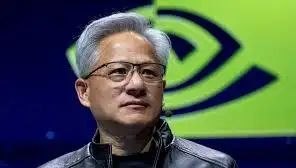
NVIDIA said Huang resigned as president, chief executive officer, and a member of the board, effective immediately.[1] That makes this a sudden transition, not a long-signaled founder handoff.
Kress will remain executive vice president and CFO while serving as interim CEO until a permanent successor is named.[1][4] That gives the company a finance-and-operations center of gravity while the board runs a broader search.
The board said operations, customer commitments, and the product roadmap should continue without interruption.[1] That message matters because the market is now judging execution risk, not only optics.
Reuters reported that the leadership shock hit NVIDIA shares and dragged on broader AI-linked names and major indexes.[2][3] That is a sign of how tightly AI sentiment is tied to one infrastructure company.
Why AI reacted so fast
NVIDIA is not just another large-cap technology company. It is the company sitting at the center of model training, inference buildout, hyperscaler GPU demand, and the hardware assumptions behind most frontier-model roadmaps. When leadership uncertainty hits NVIDIA, the risk is not limited to one stock. It reaches into cloud spending plans, startup funding assumptions, procurement timing, and the confidence cycle that has powered AI capex for the last two years.[2][3]
The deeper issue is concentration. The AI economy has been expanding on the assumption that a small number of companies can keep shipping at extraordinary scale without interruption. Huang’s exit exposed how fragile that assumption can look when one of those companies loses the executive most closely associated with its strategy, momentum, and public credibility.[2]
One insight that matters now
| Layer | Why it matters | What changed after the resignation |
|---|---|---|
| AI infrastructure | NVIDIA remains the default compute backbone for most serious AI work. | Execution continuity became more important than pure product leadership.[1][2] |
| Market narrative | NVIDIA has also functioned as the public symbol of the AI boom. | That narrative now has leadership risk attached to it.[2][3] |
| Customer psychology | Buyers tolerate concentration when the platform feels inevitable. | Once inevitability turns into uncertainty, second-source thinking gets stronger. |
| Industry competition | Rivals have struggled to break the sense that NVIDIA is structurally unbeatable. | A leadership shock does not change the roadmap overnight, but it does change how the market talks about alternatives. |
One video worth placing in the middle of the story
What this means for markets and the economy
When a single executive transition can hit AI-linked equities so quickly, the market is revealing how much spending confidence is still tied to leadership credibility at a few platform companies.[2][3]
Reuters reported that the shock weighed on the S&P 500 and Nasdaq, not only on NVIDIA.[3] That is what happens when one company becomes both an earnings engine and a symbol of the wider technology cycle.
Founder-led momentum built this cycle. The next stage will reward companies that can prove succession strength, operational resilience, and roadmap stability even under public stress.[1][4]
The board’s continuity message is clear.[1] The harder part is proving it over the next few quarters, not only through statements but through shipments, customer retention, and capital-spending follow-through.
Bottom line
Huang’s exit is a leadership event for NVIDIA, but it is also a broader stress test for the AI economy. NVIDIA’s official position is continuity.[1] The market reaction says continuity now has to be earned in public.[2][3]
The strongest takeaway is simple: AI is still a growth story, but it is no longer only a scaling story. It is becoming a resilience story too. The companies that keep winning from here will not just be the ones with the best chips or the fastest models. They will be the ones that can prove the platform survives leadership shocks without losing the confidence of customers, partners, developers, and capital markets.
Sources used for this post
Used for the official resignation announcement, interim CEO appointment, and board continuity language.
Read sourceSource for the broader AI-boom framing around Huang’s resignation.
Read sourceSource for the reported market reaction across AI-linked stocks and major indexes.
Read sourceSource for background on Colette Kress and the interim leadership setup.
Read sourceBloomberg Originals video embedded as contextual background on Huang’s rise and NVIDIA’s central role in the AI era.
Watch video