The model war just became a routing war
For two years, the AI video space looked like a model-quality race. Better physics. Longer clips. Higher resolution. Each new model announcement triggered the same cycle: demo reel, creator hype, subscription comparison.
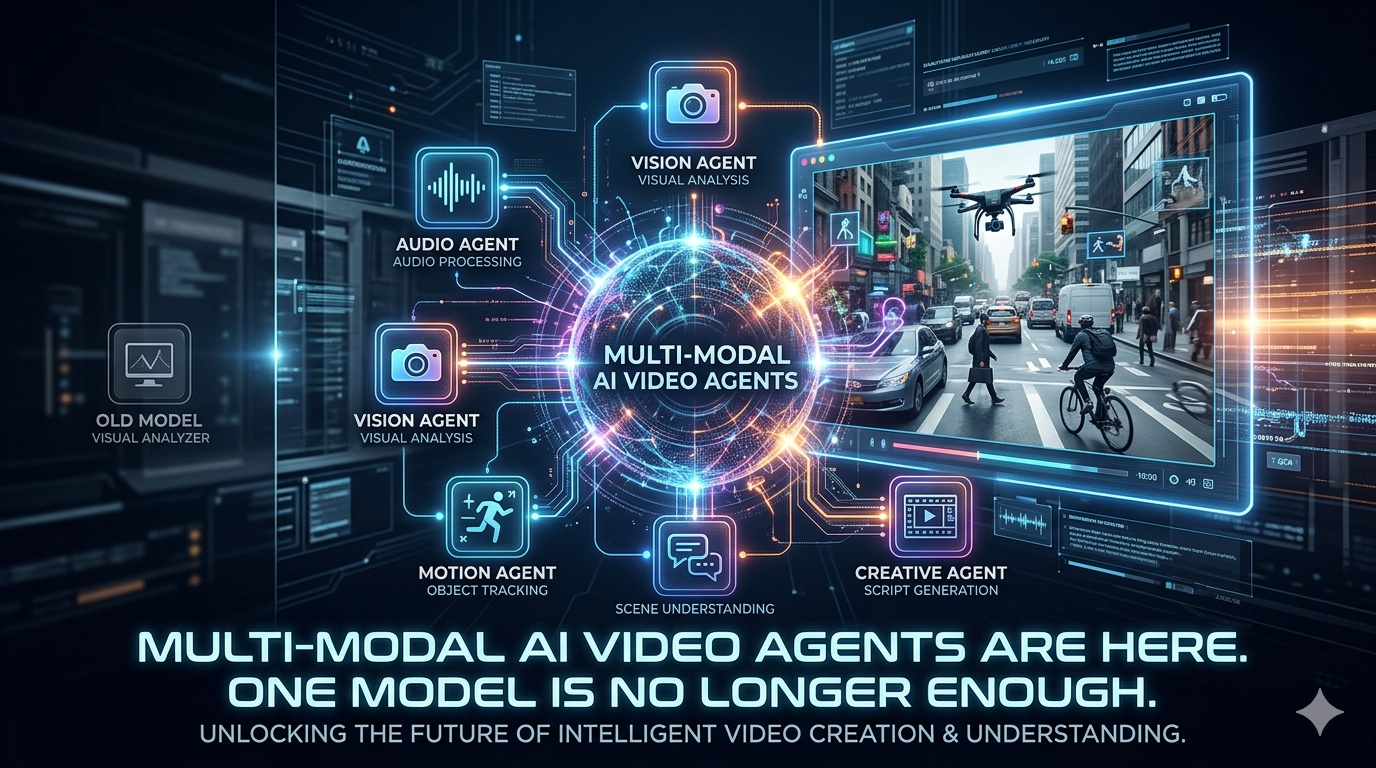
That framing broke in the last three weeks. Two different companies — from opposite ends of the market — launched the same architectural bet within 16 days of each other. Both decided the future is not building a better model. It is building the agent that picks among all of them.
If you have been locked into one AI video tool and wondering why it is great for some shots but not others, the orchestration layer is the answer you have been waiting for.
Pika flipped its entire identity
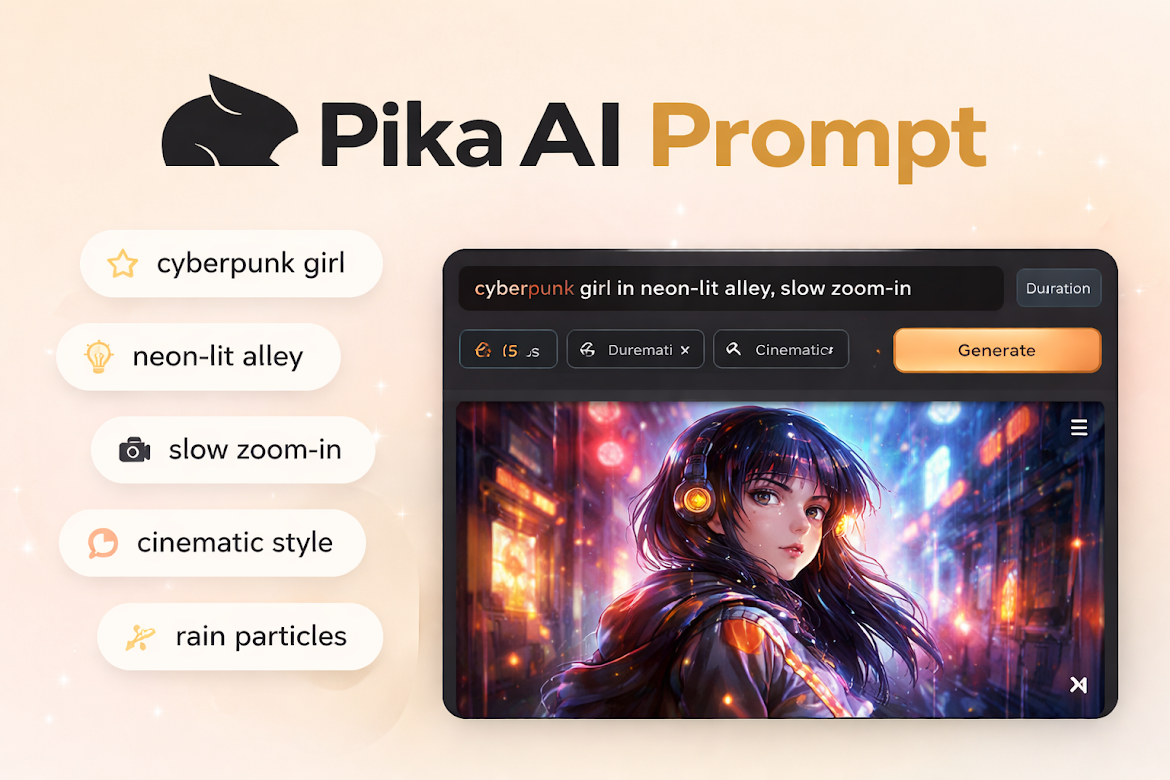
Pika spent 2024 and 2025 as one of the most visible "we are a video model" brands. On April 28, the company effectively conceded that the model competition is being won elsewhere — and relaunched as Pika Agents: a multi-modal AI creative partner that orchestrates other companies' models from a conversational interface.
The model roster Pika Agents now orchestrates is striking. On video: Pika's own model, ByteDance's Seedance 2.0, Kuaishou's Kling, MiniMax, Google's Veo 3, and OpenAI's Sora. On audio: ElevenLabs, MiniMax Music and Voice, OpenAI Whisper. On images: Gemini, ChatGPT Images 2, SeedDream.
You describe what you want. The agent decides which model to call, applies your stylistic preferences from prior conversations, and iterates based on feedback. No prompt engineering for each individual platform. No exporting from one tool and importing into another.
The distribution play is just as aggressive. Pika Agents run inside Slack, Telegram, WhatsApp, Discord, Signal, iMessage, X, Instagram, LinkedIn, YouTube, Notion, GitHub, Dropbox, Figma, and Zoom. The agent lives wherever the creator already works.
Higgsfield built the same bet from infrastructure up
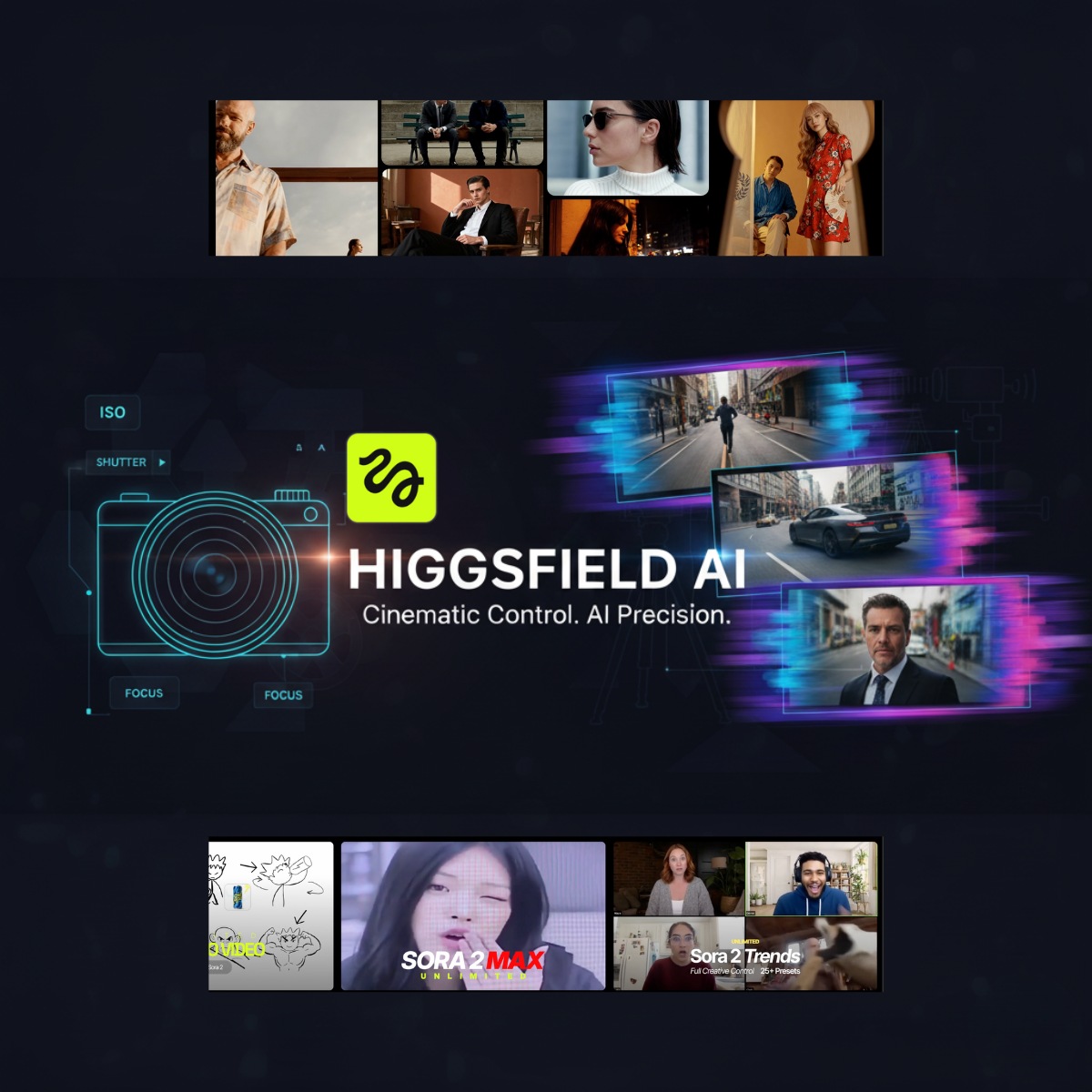
On May 14, Higgsfield AI launched what it calls the Higgsfield Supercomputer — a cloud-native agent stack for end-to-end creative production. The naming is intentionally provocative. It is not a physical machine. It is an agentic harness that routes across every frontier model under one interface.
The available engines include Claude Opus 4.6, GPT-5.5 Pro, Gemini 3.1 Pro on the reasoning side, and Seedance 2.0, Kling 3.0, and their own Soul model on the generation side. You can pick yourself or let the agent route to the best fit for the job.
What differentiates Higgsfield from Pika is the memory architecture. The system uses a three-layer memory: short-term context for the current task, long-term knowledge for your brand identity and style, and episodic memory that records what worked and what failed. If the agent spent credits trying a specific camera effect and eventually nailed it, it remembers the exact parameters and nails it first try next time.
Higgsfield demonstrated this with a 23-minute sci-fi pilot — "Hell Grind" — produced in 96 hours by a small team. Traditional animation would take a team of 50 people six months.
The shift: from prompting models to directing agents. You describe the end state. The agent handles model selection, retries, quality checks, and format delivery.
Why this matters more than another model launch
Every time a new model launches, creators face the same calculus: is this good enough to justify switching subscriptions? The multi-model agent dissolves that question entirely. You do not switch. You add.
Three practical shifts for creators:
- No more "best model" debates. When Kling 3.0 excels at motion control but Seedance 2.0 wins on native audio sync, a routing agent uses both in the same project without you managing the handoff.
- Cheaper experimentation. Instead of subscribing to five platforms at $30-50 each, one orchestration layer gives access to the full stack. Higgsfield charges $75/month for access to 15+ models.
- Persistent creative memory. Both platforms remember your preferences, brand guidelines, and past successes. Session two is faster than session one, every time.
The pattern is everywhere now
Pika and Higgsfield are not alone. The RCTV weekly roundup noted that three consecutive weeks of AI video news have landed on the same theme: the surface layer is eating distribution.
Adobe Firefly now routes across 30+ models. HappyHorse-1.0 — currently #1 on Artificial Analysis's text-to-video leaderboard — launched commercially through fal.ai's marketplace, not through Alibaba's own portal. When the world's best video model reaches developers through a third-party aggregator, the model layer has been commoditized.
The practical test for the next month: if the next Veo, Kling, or Seedance release lands first as an integration inside an orchestration platform rather than as a standalone consumer product, the routing layer has won the distribution argument outright.
Where OmniFit fits in this world
OmniFit is chasing the same endgame from the platform-fit side. Multi-model agents handle creation and sequencing. OmniFit handles what happens after: taking a finished piece and intelligently adapting it for every platform without rebuilding anything by hand.
The agent reads content, motion, scene transitions, and narrative flow — then figures out the best transformation strategy for the target platform while protecting the story. That is the same "agent above models" pattern, applied to distribution instead of generation.
Create once with a multi-model agent. Distribute everywhere with a platform-fit agent. That is the new stack.
What creators should do with this now
1. Stop subscribing to individual models
If you are paying for Runway, Kling, and Pika separately, an orchestration platform will likely give you all three plus routing intelligence for the same total cost or less.
2. Invest in your creative brief, not prompt syntax
Multi-model agents respond to intent, not per-platform prompt tricks. Describe what you want. Let the agent handle which model to call and how to phrase it.
3. Watch for the memory advantage
The agent that remembers your brand, your style, and your past wins gets better every session. Start building that history now — switching later means starting from zero.
The honest trade-offs
This is still early. Both platforms have visible gaps.
Pika Agents launched a week ago and the orchestration quality will vary by model and by task. Routing intelligence is only as good as the heuristics behind it — and creators have not yet stress-tested edge cases at scale.
Higgsfield Supercomputer has day-one bugs: Kling 3.0 integrations fail silently without useful error messages, the memory UX lacks a delete button, and Connectors stability is uneven. The workaround is to ask the agent to retry with fallback models — which works, but adds friction.
Neither platform gives you the fine-grained, frame-level control that native tools like Runway's timeline editor or DaVinci Resolve provide. If you need precise keyframe work, you still need a dedicated editor. These agents own the "brief to first draft" layer, not the "final polish" layer.
Sources
RCTV Weekly Roundup (May 4)
Primary source for Pika Agents launch details (April 28), model roster, platform integrations, HappyHorse-1.0 commercialization, and the aggregator-layer thesis.
Read source ↗
Higgsfield Supercomputer
Used for the Supercomputer launch claims, Hermes Agent architecture, three-layer memory system, model roster, and the Hell Grind production timeline.
Read source ↗
ExplainX (May 14 deep dive)
Technical architecture source for Seedance 2.0 dual-branch DiT, recursive tool use, and episodic memory design.
Read source ↗