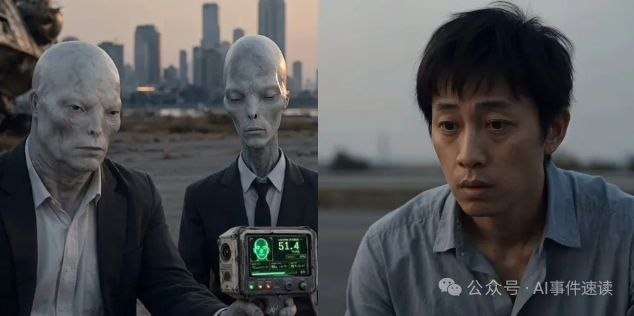
The breakout 3-minute short film No Time Left to Live blew up because people stopped arguing about visual quality and started arguing about their own lives. That is the bigger signal for AI filmmakers.
📅 Published: August 25, 2026
By Standing ShadowAugust 25, 20267 min readAI short film / Story / Creator workflow
Short version: once everyone can generate polished shots, the scarce thing is no longer image quality. It is the story question, the point of view, and the creator judgment behind the final cut.
Source still from the short film used as the hero image for this article.
The viral stat
The film reportedly crossed 100 million plays in two days, with around 250 million views and 14.7 million likes on Douyin alone.
The real reason it spread
People were not mainly discussing whether the AI effects looked real. They were discussing time poverty, work, debt, and whether modern life leaves anyone real time of their own.
The premise is absurd. The feeling is not.
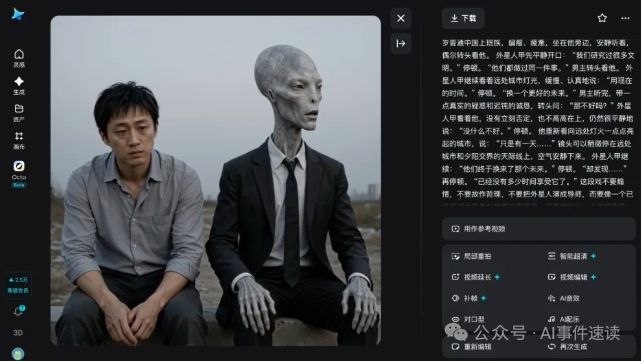
The short film starts like a sci-fi joke. Two aliens arrive on Earth and set up a street booth to buy back human lifespan at a high price. A middle-aged man, crushed by debt and everyday pressure, thinks he can sell ten years of life to get cash and pay down what he owes.
Then the film lands its punchline. He still has 51 years and 4 months left to live, but after subtracting work, commuting, sleep, and endless revenge-scrolling on his phone, the time he can actually control himself is only 21 days and 7 hours.
That calculation is why the film spread. It turns a vague feeling into one brutal number.
Another source still from the short film. The article works because the concept is instantly legible even before you know the workflow behind it.
Why viewers cared more about the idea than the VFX
After the trade goes through, the man loses every spare crack in his life. He sits down to eat and the meal is already over. He tries to rest and immediately has to return to work. His days become fully occupied, with no loose space left inside them.
The film does not end as a simple anti-work lecture. Instead, it asks a sharper question: if people work this hard to build a better future, what happens when they finally reach it with no time left to enjoy it?
That is why the comments reportedly centered on life choices and time poverty rather than on whether the generated images looked cinematic enough. The image quality got people in. The idea gave them something to debate.
AI was the execution department. The director was still the core.
The creator behind the account, Standing Shadow, comes from a traditional film background and teaches cinematography. That matters because the workflow described here does not sound like “one prompt makes a movie.” It sounds much closer to real directing.
1. Start with the question
Lock the core theme first. In this case: how much time is actually yours after life gets divided up by work and habit?
2. Fix the visual world
Create reference images for characters, props, camera positions, and locations so the film does not drift shot to shot.
3. Generate many shots
Use multiple text-to-video tools for raw footage and use ChatGPT to help refine dialogue and logic where needed.
4. Finish like a normal film
Return to traditional editing software for the cut, the color work, and the sound design. The final story still gets made in the edit.
One especially useful detail: the reported usable-shot rate was only around 10% to 20%. That is a good reminder that AI lowered the production barrier, but it did not remove the cost of taste, iteration, and decision-making.
Three things AI still struggles to replace
Why tell this story?
AI can visualize a concept, but it cannot decide why this idea matters now or why people should care.
What do you believe?
This short film works because it has a point of view about work, debt, distraction, and how life gets spent.
Which shot survives?
The final cut still depends on human judgment: what feels true, what feels cheap, what drags, and what earns its place.
What becomes scarce next?
Not clean visuals. Not flashy motion. The scarce thing is authorial judgment: the ability to choose, remove, and shape meaning.
What this means for AI filmmakers now
The first half of the AI video era was a race to prove what the tools could render: smoother motion, better lighting, more cinematic frames, more realistic effects. That race is not over, but it is no longer enough by itself.
As video models get better and cheaper, visual quality becomes less scarce. The real split starts at the narrative layer. Traditional film craft still matters: scripting, visual language, editing rhythm, and taste. The difference is that one person can now act like a miniature studio — if they can think like one.
If everybody can generate pretty footage, the next advantage comes from what you notice, what you believe, and what you choose to keep.
Good AI video still needs a human center
The breakout lesson from this short film is simple: AI can make the frame. It still takes a creator to make the frame mean something.
Yes, but they are increasingly table stakes. They help you get attention, not necessarily keep it.
Why did this short film travel so fast?
Because the core metaphor was easy to grasp and emotionally familiar. People immediately mapped it onto their own lives.
What is the workflow lesson?
Treat AI like a production department, not a substitute for direction. Lock the idea first, then use tools to execute it.
What is the next real moat?
Story sense, author voice, and taste under pressure. Those are harder to automate than camera moves or lighting.
Source note
User-provided Chinese source text
This article is based on the Chinese source material supplied in chat, covering the short film's premise, reported platform performance, and the creator's interview comments about workflow and authorship.
Creator credited in article
The short film is attributed here to Standing Shadow, the creator name provided in the source material.