
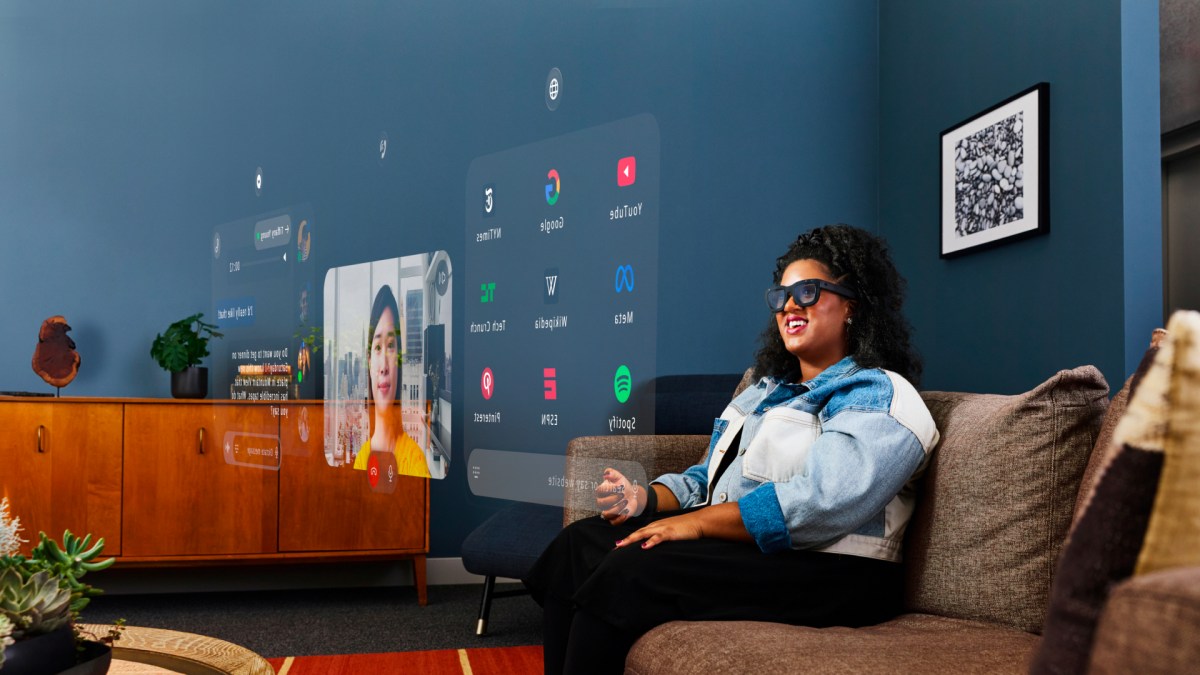
What Meta is actually signaling
Instead of treating your Chinese source as ground truth, the safer read is to anchor on what Meta has publicly said itself. In The Future is for Everyone, Meta frames the core AI question like this: will superintelligence be “centralized and restricted to a few institutions,” or become a tool that reaches everyone?
That matters because it is not just another benchmark press release. It is a philosophy statement. Meta is clearly arguing against a future where the next AI layer is controlled by a small number of closed platforms.
| Meta signal | What the live sources support | Why it matters |
|---|---|---|
| Against extreme concentration | Meta’s August 2026 essay says the idea that AI is so dangerous that the only safe path is “an extreme concentration of power” is problematic. | This is the cleanest official version of Meta’s anti-centralization AI argument. |
| Distribution over gatekeeping | The same essay says Meta believes “delivering superintelligence to everyone” is the better path and that access should be free or affordable. | That is a strong product and policy stance, not just a vague research preference. |
| Open local agents | Meta’s developer site now promotes Muse Glimmer as “an open agentic model that runs on your device,” built for always-on local agents. | This suggests Meta wants part of the next AI wave to happen on-device, not only in giant cloud stacks. |
| Glasses as the next interface | Meta’s Orion and 2025 highlights pages both connect AI to glasses, and Meta explicitly says it believes glasses are the ideal form factor for AI. | The software strategy and the hardware strategy are clearly linked. |
Conservative read: Meta’s official materials support a strong pro-distribution AI argument. They do not, by themselves, fully support every viral retelling about direct one-to-one attacks on specific rivals.
Watch one strong Orion walkthrough
Meta’s open AI argument is about power, not only code
Meta’s 2026 essay asks whether advanced AI should be centralized inside a few institutions. That is the real core of the company’s position. It is less about “open source as branding” and more about resisting a future where only a few platforms decide how intelligence is used.
Meta explicitly says these tools should be free or affordable. That matters for creators, indie builders, and small teams, because access cost often shapes who gets to experiment first and who gets left behind.
On Meta’s developer platform, Muse Glimmer is described as a 30B open model optimized for local agent workflows and small enough to run on a Mac or PC with a single consumer GPU. That is a practical clue that Meta sees real value in local, persistent, private-ish agent workflows.
Meta’s 2025 highlights page says Llama hit 1 billion downloads. That does not prove open models win everything, but it does show Meta already has a serious distribution base for its broader open AI story.
Orion is the hardware version of the same idea
Meta’s official Orion announcement says there are three main reasons AR glasses matter. Two are especially important here.
Beyond the phone screen
Meta says AR glasses enable digital experiences that are not constrained by the limits of a smartphone screen. That is a blunt statement of intent. The long-term goal is not better accessories for phones. It is a post-phone interface.
Contextual AI in the real world
The Orion page also says these glasses can integrate contextual AI that senses and understands the world around you. That is where the open AI story and the hardware story meet: personal AI gets more useful when it is attached to what you see and do.
Not a consumer launch yet
Meta is careful to say Orion is a polished product prototype, not a broad consumer release. Access is limited so the company can keep learning and iterating. So the right reading is direction, not immediate mass adoption.
Glasses stay central to Meta’s roadmap
Meta’s 2025 highlights page says it believes glasses are the ideal form factor for AI. That means Orion is not an isolated experiment. It sits inside a wider push that includes Ray-Ban smart glasses, display glasses, and future wearable interfaces.
Why creators should care
If more capable open or open-adjacent models keep improving, more creators and small teams can build their own tools instead of renting everything from closed APIs. That can mean better margins, more control, and less platform dependence.
A local agent model like Muse Glimmer is not just another model announcement. It hints at always-on personal automation that can live closer to your own device, files, and habits. For creators, that could matter for editing prep, research, publishing support, and personal assistant workflows.
AI glasses are not just about notifications. They point toward hands-free capture, contextual prompting, real-time help, and mixed physical-digital creation flows. That is especially relevant for creators who already move between filming, scripting, and live decision-making.
Even if the phone does not disappear soon, Meta is trying to pull creative and communication behavior onto wearables. If that shift works, creators will need to think about content, interfaces, and audience interaction in more spatial and persistent ways.
What is still unclear
How far the open model strategy really goes
Meta clearly favors broad distribution, but the practical boundary between open, semi-open, hosted, and managed products still matters. “More open than rivals” is not the same as infinite freedom.
How fast glasses move from demo to mainstream
Orion is important, but it is still a prototype path. Comfort, cost, battery, social acceptance, and software usefulness still decide whether glasses become truly everyday devices.
Whether creators actually want AI on-face all day
Hands-free AI sounds powerful. It can also feel invasive, distracting, or awkward. The product category still has to prove it helps more than it annoys.
How much of this turns into durable creator advantage
The big question is not whether the demos are impressive. It is whether creators can turn open AI plus wearable interfaces into faster, better, more profitable workflows in the real world.
Bottom line
Zuckerberg’s current message is not just “we like open source” and not just “look at our AR glasses.” It is a two-part strategy. Meta wants AI to be distributed more widely instead of concentrated inside a few closed systems. Then it wants that intelligence to move onto a wearable interface that can stay with you all day.
If Meta is right, the next computing fight will not only be about which model is best. It will also be about where that intelligence lives, who controls it, and whether creators can use it without asking permission from a small number of gatekeepers.
Sources used for this post
Used for Meta’s official 2026 framing around centralized AI, broad access, and delivering superintelligence more widely.
Read sourceUsed for Orion’s purpose, why Meta thinks AR glasses matter, and the official language around contextual AI and moving beyond the smartphone screen.
Read sourceUsed for Muse Glimmer positioning, including Meta’s language around an open agentic model that runs on your device and supports local agent workflows.
Read sourceUsed for the 1 billion Llama downloads reference and Meta’s statement that glasses are the ideal form factor for AI.
Read sourceUsed as the companion video for this page.
Watch video